
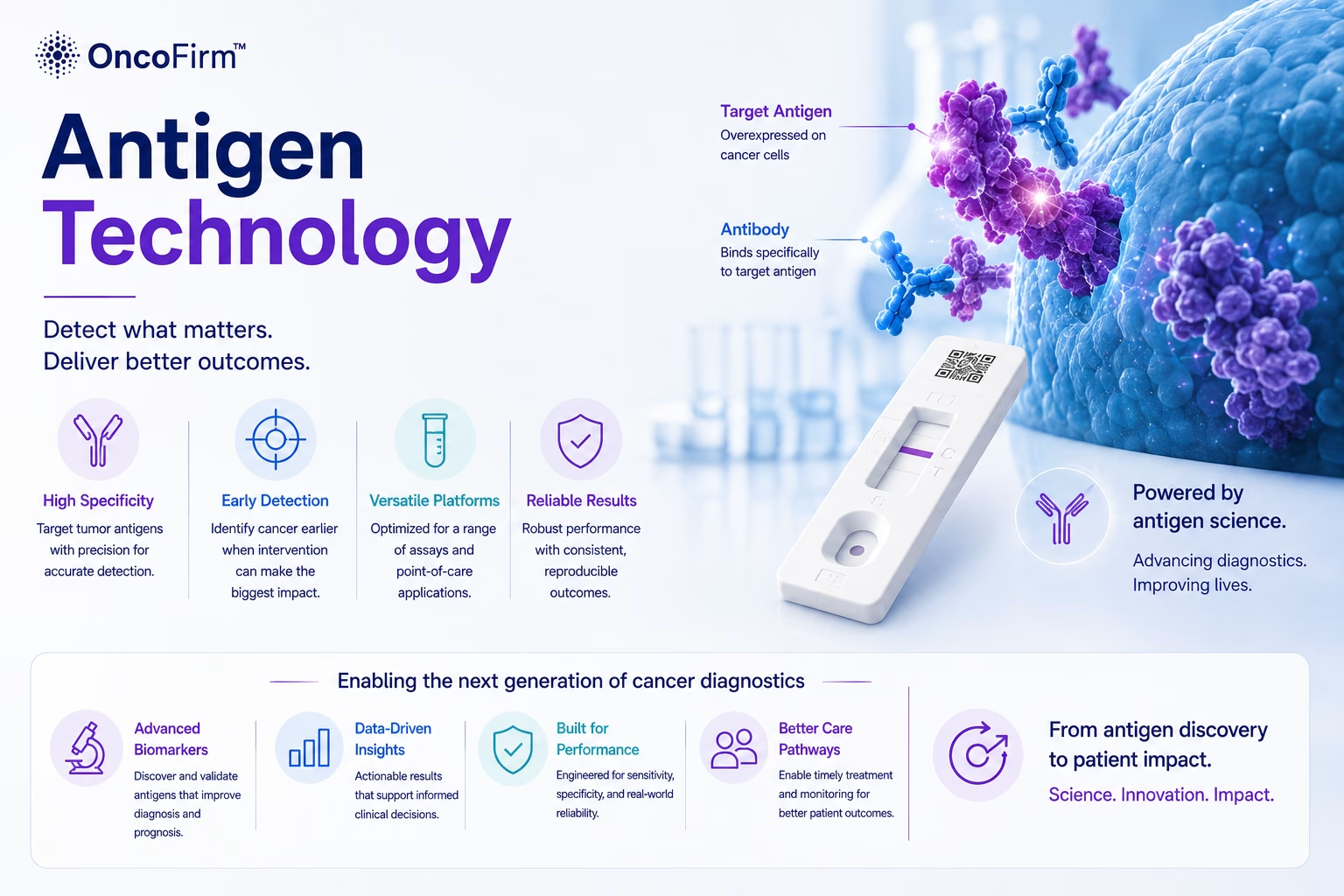
Antigen Technology | Early Cancer Diagnostics | OncoFirm™
Antigen Technology for Early Cancer Diagnostics: Advancing Precision Through Next-Generation Immunodiagnostics
Antigen Technology: Advancing the Next Generation of Early Cancer Diagnostics
Modern oncology increasingly relies on the ability to identify measurable biological signals associated with cancer. Among the most established and clinically significant of these signals are tumor-associated antigens—proteins that may be expressed or released by malignant cells and detected using highly specific antibody-based diagnostic technologies.
At OncoFirm™, we are developing proprietary antigen-based diagnostic technologies designed to support the future of early cancer diagnostics. By combining advanced immunochemistry, fluorescence-based detection, digital analysis, and scalable rapid testing platforms, our goal is to enable high-performance biomarker detection that complements molecular diagnostics, medical imaging, and traditional laboratory medicine.
Our technology platform is built upon decades of scientific progress in immunology, antibody engineering, and biomarker research while incorporating next-generation innovations in digital diagnostics and artificial intelligence.
What Is Antigen Technology?
Antigen technology refers to the use of highly specific biological recognition systems to detect proteins associated with disease.
In oncology, these proteins—commonly referred to as tumor antigens or cancer biomarkers—may be present within blood, serum, plasma, tissue, urine, saliva, or other biological specimens.
Using carefully selected antibodies, immunodiagnostic systems recognize and bind to target antigens, generating measurable signals that may assist in laboratory analysis and clinical evaluation.
Unlike genomic testing, which evaluates DNA or RNA, antigen-based diagnostics measure protein expression, providing complementary biological information about disease processes.
The Science Behind Antigen Detection
Antibody-antigen recognition is one of the most selective biological interactions in nature.
Diagnostic immunoassays exploit this specificity by pairing engineered antibodies with carefully validated target biomarkers.
The process generally involves:
- Collection of a biological sample.
- Exposure of the sample to antibodies specific for the target antigen.
- Formation of antigen–antibody complexes.
- Signal generation using optical, fluorescent, enzymatic, or chemiluminescent detection systems.
- Interpretation of the measured signal using validated analytical methods.
The quality of an antigen-based assay depends on multiple factors, including antibody affinity, assay design, analytical sensitivity, specificity, reproducibility, and quality control.
Why Tumor Antigens Matter in Oncology
Cancer cells often produce proteins that differ in abundance, localization, or biological behavior from those found in healthy tissue.
These proteins may provide valuable biological information for:
- Diagnostic evaluation
- Disease characterization
- Treatment selection
- Monitoring therapeutic response
- Disease surveillance
- Biomarker research
- Precision oncology
Importantly, antigen-based tests are generally interpreted alongside imaging, pathology, molecular diagnostics, and clinical findings rather than as stand-alone diagnostic tools.
Common Tumor Antigens in Clinical Practice
A number of tumor-associated antigens have established or evolving roles in oncology.
Examples include:
- Prostate-Specific Antigen (PSA)
- Carcinoembryonic Antigen (CEA)
- Cancer Antigen 125 (CA-125)
- Cancer Antigen 19-9 (CA 19-9)
- Alpha-Fetoprotein (AFP)
- Human Epididymis Protein 4 (HE4)
Each biomarker has specific clinical applications, limitations, and evidence supporting its use. Ongoing research continues to identify additional protein biomarkers that may contribute to future diagnostic strategies.
OncoFirm’s Antigen Technology Platform
OncoFirm is developing an integrated antigen detection platform that combines advanced immunodiagnostics with modern digital technologies.
Core areas of innovation include:
High-Affinity Antibody Engineering
The performance of any immunoassay begins with antibody specificity and affinity.
Our development strategy emphasizes highly selective antibody-antigen interactions designed to maximize analytical performance while minimizing nonspecific background signals.
Fluorescent Signal Detection
Traditional rapid immunoassays often rely on colorimetric detection.
OncoFirm’s technology focuses on fluorescence-based signal generation, enabling digital measurement of antigen binding events.
Potential advantages of fluorescence-based detection include:
- Improved analytical sensitivity in certain assay designs
- Objective digital measurement
- Expanded dynamic range
- Multiplex detection capability
- Reduced observer variability
- Compatibility with automated analysis
Actual assay performance depends on analytical validation and intended use.
Digital Diagnostic Integration
Our platform is designed for compatibility with digital optical readers capable of:
- Automated signal acquisition
- Quantitative analysis
- Quality control verification
- Secure data management
- AI-assisted interpretation
- Cloud-enabled connectivity
Digital workflows help standardize result interpretation and facilitate integration into modern healthcare environments.
Multiplex Biomarker Detection
Cancer is biologically heterogeneous, and no single biomarker is sufficient for every clinical application.
Our technology strategy includes the capability to evaluate multiple tumor-associated antigens within a single diagnostic platform, supporting future multiplex biomarker panels and more comprehensive biological assessment.
Antigen Technology and Early Cancer Diagnostics
Earlier detection remains one of the greatest opportunities in oncology.
Protein biomarkers may become measurable before overt clinical symptoms develop, making antigen detection an important area of research for early diagnostic applications.
Advances in:
- Antibody engineering
- Fluorescent detection
- Signal amplification
- Nanotechnology
- Digital imaging
- Artificial intelligence
are expanding the analytical capabilities of antigen-based diagnostic systems.
While continued clinical validation is essential, these innovations may contribute to future approaches for earlier biomarker detection and more accessible diagnostic testing.
Antigen Technology Compared with Other Diagnostic Approaches
Different diagnostic technologies evaluate different aspects of cancer biology.
| Technology | Primary Target | Typical Strengths |
|---|---|---|
| Antigen-based immunodiagnostics | Proteins (tumor antigens) | Rapid protein biomarker detection, compatibility with point-of-care platforms |
| Molecular diagnostics | DNA and RNA | Mutation analysis, genomic profiling |
| Liquid biopsy | ctDNA, cfDNA, CTCs, proteins | Minimally invasive molecular assessment |
| Medical imaging | Anatomical and functional changes | Tumor localization and characterization |
| Histopathology | Tissue architecture | Gold standard for many cancer diagnoses |
Rather than competing technologies, these methods provide complementary information that can contribute to comprehensive cancer evaluation.
Artificial Intelligence and Digital Immunodiagnostics
Artificial intelligence is increasingly integrated into modern diagnostic systems.
Within antigen-based diagnostics, AI-assisted software may support:
- Automated fluorescence interpretation
- Signal normalization
- Quality assurance
- Multiplex biomarker analysis
- Trend analysis
- Clinical workflow optimization
AI is intended to enhance consistency and support clinical interpretation while maintaining appropriate human oversight.
Point-of-Care Applications
Advances in fluorescence detection and digital readers are expanding opportunities for decentralized testing.
Future point-of-care antigen technologies may support:
- Community healthcare settings
- Physician offices
- Outpatient clinics
- Mobile health programs
- Resource-limited environments
These technologies are intended to complement centralized laboratory testing and increase access to diagnostic information where appropriate.
Research and Development
OncoFirm’s research and development strategy focuses on advancing immunodiagnostic technologies through:
- Biomarker discovery
- Antibody optimization
- Fluorescent assay development
- Analytical validation
- Digital diagnostics
- Strategic collaborations
- Scalable manufacturing
We collaborate across scientific disciplines to translate biomarker research into practical diagnostic solutions while adhering to rigorous analytical and regulatory standards.
Our Vision
We believe the future of oncology diagnostics will be driven by the integration of:
- Advanced antigen technology
- High-performance immunodiagnostics
- Artificial intelligence
- Digital health platforms
- Multiplex biomarker detection
- Point-of-care diagnostics
- Precision oncology
By combining these technologies into a unified platform, OncoFirm aims to contribute to more accessible, data-driven, and patient-centered approaches to cancer diagnostics.
Frequently Asked Questions
What is antigen technology?
Antigen technology uses highly specific antibodies to detect proteins associated with disease. In oncology, these proteins may serve as biomarkers that provide information about cancer biology.
How does antigen detection differ from genetic testing?
Antigen detection measures proteins, while genetic testing analyzes DNA or RNA. These technologies provide complementary biological information and are often used together in oncology.
Why is fluorescence used in modern immunodiagnostics?
Fluorescent detection enables digital measurement of biological signals and is being investigated for applications requiring quantitative analysis, enhanced sensitivity, and multiplex biomarker detection.
Can antigen technology be used at the point of care?
Many antigen-based assays are well suited to portable diagnostic platforms. Advances in fluorescence detection and digital readers are expanding opportunities for decentralized testing, depending on the intended application and validation of the system.
Conclusion
Antigen technology remains a cornerstone of modern immunodiagnostics and an important component of the future of early cancer diagnostics. By leveraging the specificity of antibody-antigen interactions, advanced fluorescence detection, and digital analysis, next-generation immunoassays have the potential to provide high-quality biomarker information that complements molecular diagnostics, imaging, and pathology.
At OncoFirm™, we are advancing proprietary antigen-based technologies designed to support rapid, scalable, and data-driven cancer diagnostics. Through continued innovation in immunochemistry, digital diagnostics, and biomarker science, we aim to contribute to the next generation of precision oncology and point-of-care diagnostic solutions.
Why OncoFirm™
- Proprietary antigen-based diagnostic platform
- Advanced fluorescent immunodiagnostics
- AI-ready digital interpretation
- Scalable rapid diagnostic technologies
- Focus on early cancer diagnostics
- Research-driven innovation
- Commitment to analytical quality and scientific rigor
Suggested Internal Links
Technology Pages
- Fluorescent Lateral Flow Platform
- Digital Diagnostic Reader
- Artificial Intelligence Platform
- Biomarker Discovery
- Research & Development
Supporting Articles
- What Are Cancer Biomarkers?
- Tumor Antigen Detection
- Why Early Detection Matters
- Point-of-Care Oncology
- How Lateral Flow Assays Work
- Fluorescent vs. Gold Nanoparticle Assays
- Liquid Biopsy Explained
- AI in Cancer Diagnostics
Suggested Peer-Reviewed References
- Hanahan D. Hallmarks of Cancer: New Dimensions. Cancer Discovery. 2022.
- Diamandis EP. Tumor Markers: Past, Present and Future. Clinical Chemistry.
- Duffy MJ. Tumor Markers in Clinical Practice: A Review Focusing on Common Solid Cancers.
- Ludwig JA, Weinstein JN. Biomarkers in Cancer Staging, Prognosis and Treatment Selection. Nature Reviews Cancer.
- National Cancer Institute (NCI). Cancer Biomarkers and Early Detection Research.
- U.S. Food and Drug Administration (FDA). Guidance for In Vitro Diagnostic Devices.
- World Health Organization (WHO). Essential In Vitro Diagnostics.
- National Comprehensive Cancer Network (NCCN). Clinical Practice Guidelines in Oncology.