
Research Team – Fluorescent Lateral Flow Testing (FLFT) for Early Cancer Detection
Fluorescent Lateral Flow Testing (FLFT) for Early Cancer Detection
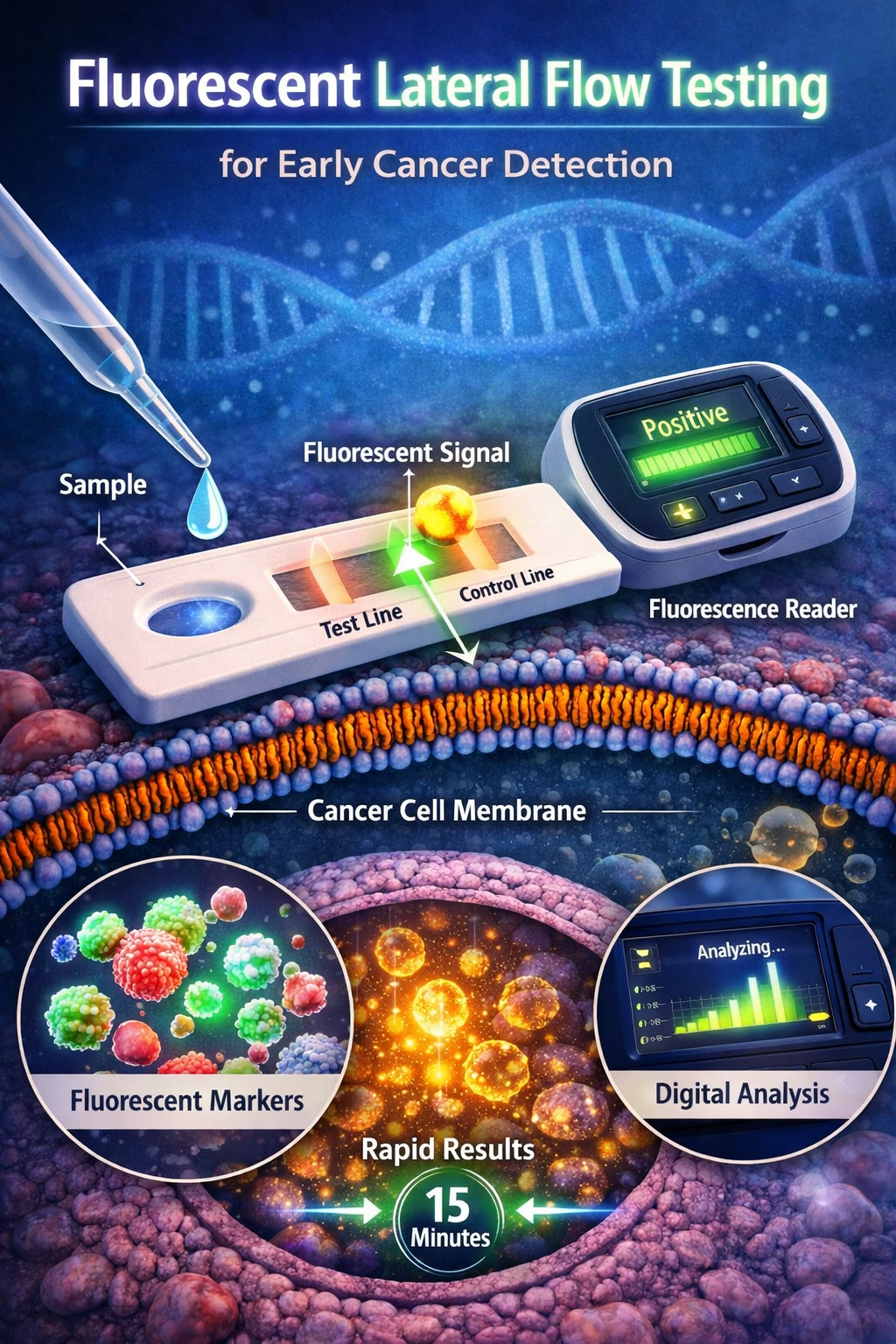
Our research team has developed a next‑generation fluorescent lateral flow test (FLFT) to power our ultra‑sensitive rapid cancer detection platform.
FLFT technology builds on traditional lateral flow assays but replaces colored particles with fluorescent labels, dramatically increasing sensitivity and enabling true quantitative measurement.
Why FLFT Matters
-
Higher Sensitivity — Detects biomarkers at extremely low concentrations.
-
Quantitative Results — Measures exact biomarker levels, not just positive/negative.
-
Greater Accuracy — Fluorescence reduces ambiguity and improves signal clarity.
-
Fast & User‑Friendly — Keeps the simplicity and speed of standard lateral flow tests.
Where FLFT Is Used
-
Early cancer biomarker detection
-
Infectious disease testing
-
Hormone and metabolic assays
-
Environmental and food safety monitoring
How It Works
Fluorescent molecules or nanoparticles are attached to antibodies or other target‑specific probes. When a sample is applied:
-
Target biomarkers bind to the fluorescent probes.
-
These complexes migrate along the test strip.
-
They accumulate at the test line, forming a fluorescent signal.
-
A handheld fluorescence reader illuminates the strip and measures the emitted light.
The intensity of the fluorescence corresponds directly to the concentration of the biomarker—delivering fast, precise, and highly sensitive results.